Numerical simulation · Engineering assessment · Industrial applications info@numericalarchive.com
← Back to Projects
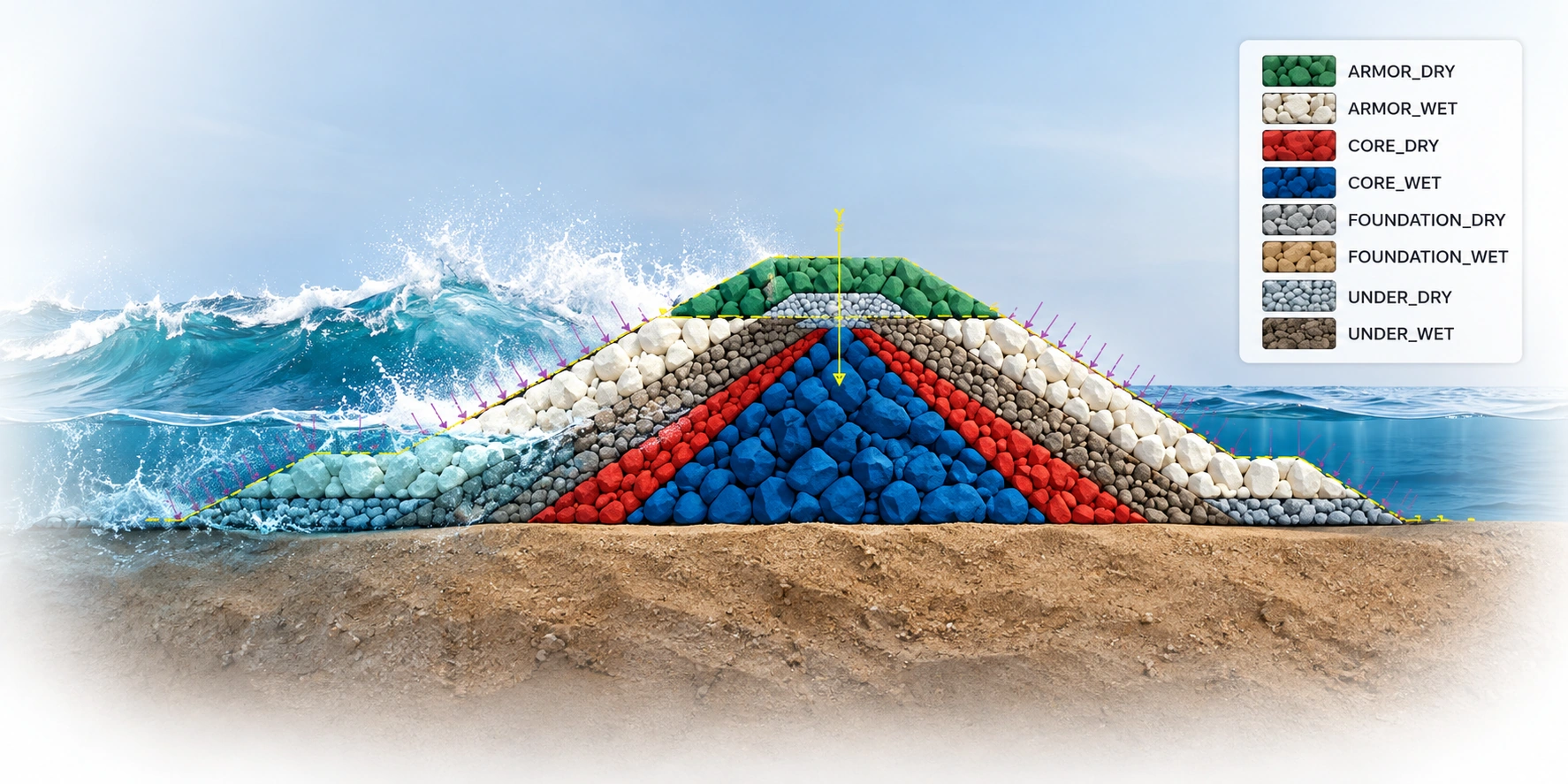
Layered breakwater representation with finite-element mesh detail
Marine & ports · Applied numerical study

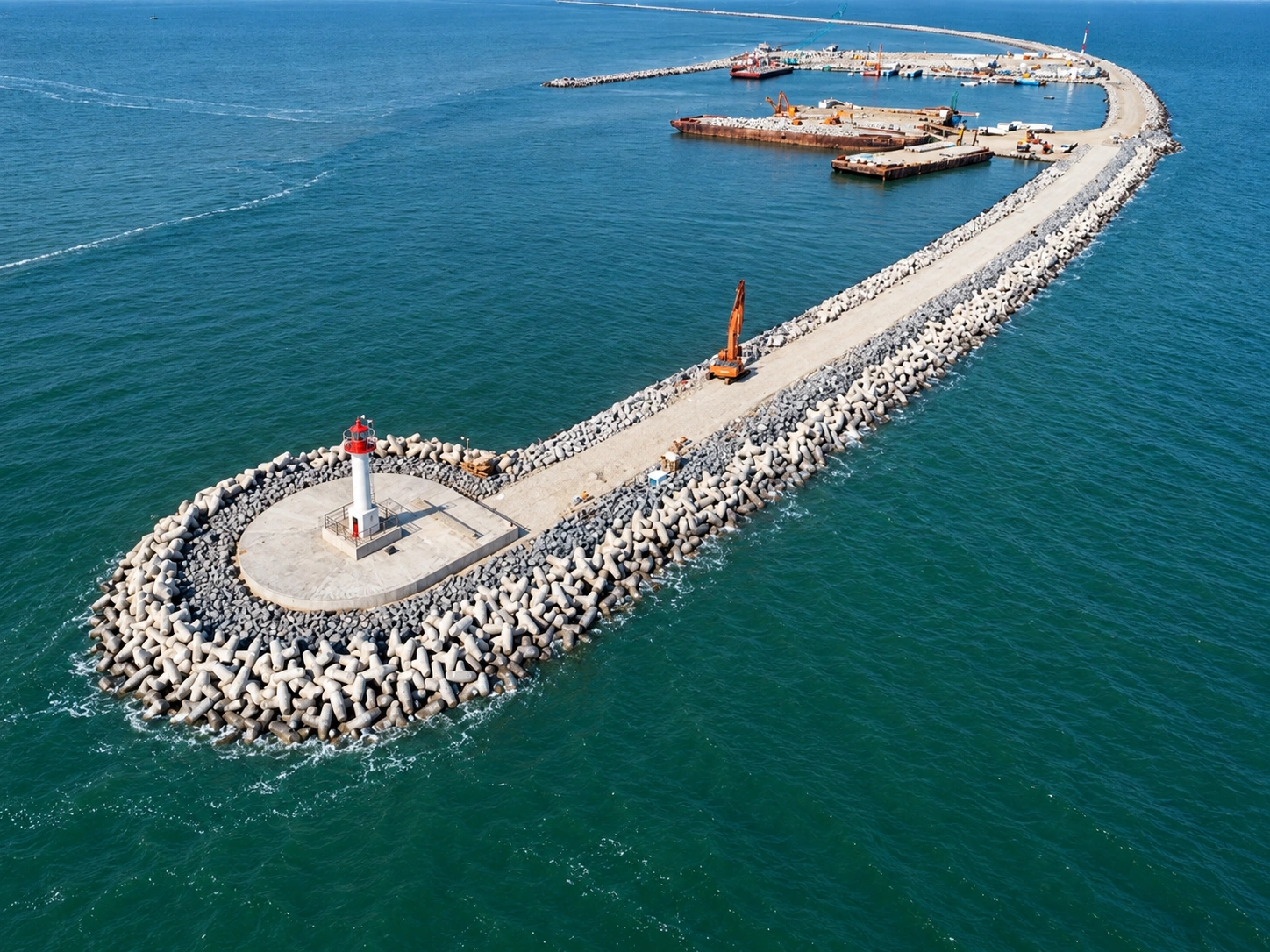
Rubble-Mound Breakwater

A coupled finite-element study of a layered breakwater and its foundation under repeated prescribed wave pressure—developed to understand response across the complete section rather than through a single monitoring point.

Marine StructuresAbaqusCoupled ResponseCyclic Loading
SystemLayered breakwater & foundation
Representation2D continuum model
LoadingRepeated prescribed wave pressure
FocusSystem-level response interpretation
01 · Engineering challenge

The response of a breakwater is distributed across the section.

Crest movement is useful, but it cannot describe what is happening at the seaward toe, within the core or in the supporting foundation. This study was developed as a reference framework for examining those response zones together under repeated loading.

Look beyond a single point

The numerical model makes it possible to compare response at different parts of the section and to follow how deformation and internal actions develop through successive loading stages.

  • Crest and slope response
  • Seaward toe behaviour
  • Foundation participation
  • Internal load-transfer mechanisms

Use the model for interpretation

The objective is not to turn a single contour or displacement value into a design verdict. The model is used to identify where closer engineering investigation is justified.

  • Pore-pressure response
  • Effective-stress redistribution
  • Plastic-strain localisation
  • Behaviour under repeated loading
02 · Layered representation

From armour layer to supporting foundation.

The breakwater is represented as a layered continuum so the principal material zones and their interaction can be considered within one numerical system. Saturated regions are treated with coupled displacement–pore-pressure behaviour, while the reference material model captures the frictional response of the granular system.

Illustrated material zones used to represent the breakwater and foundation
Layered material representation Armour · underlayer · core · supporting foundation · wet/dry zones
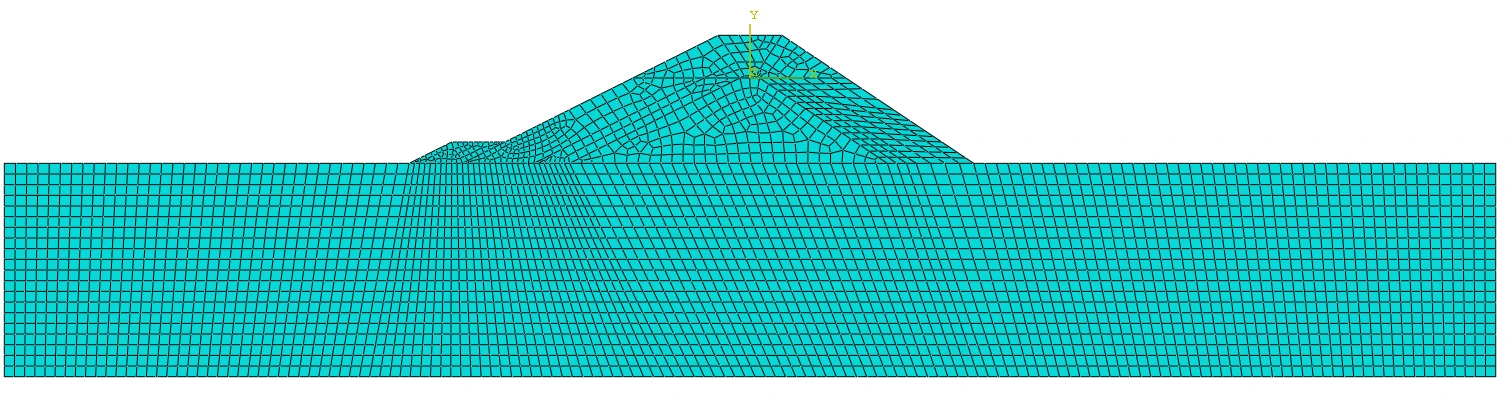
03 · Finite-element mesh

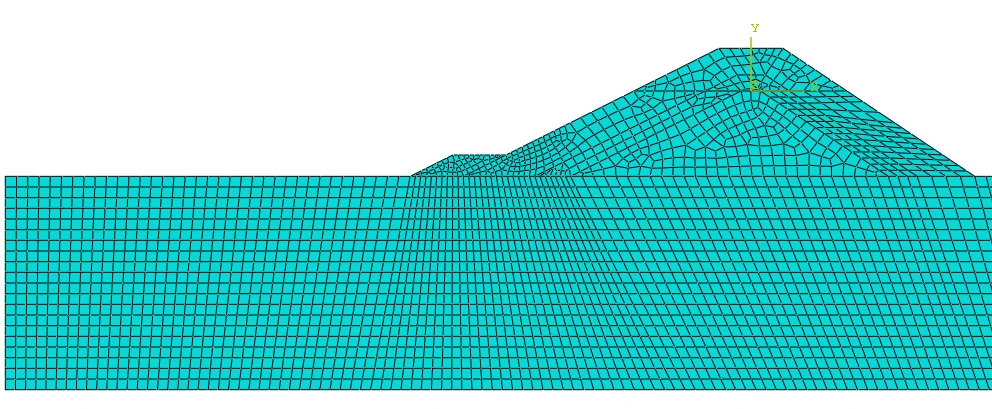
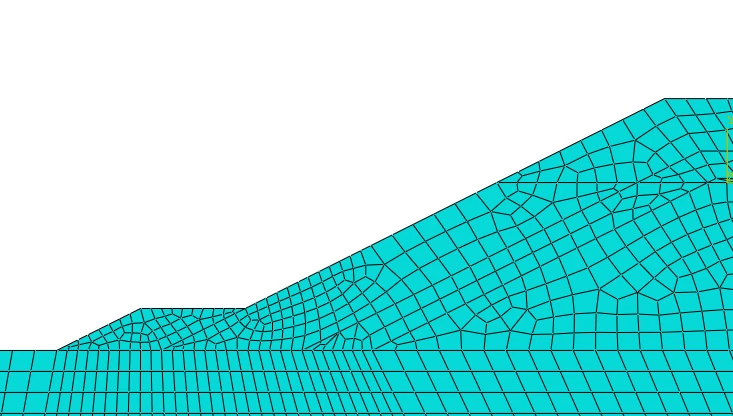
Mesh resolution follows the geometry and the expected load-transfer zones.

The full section is discretised as a connected continuum, with closer representation through slope transitions, the seaward toe and changes in geometry where local response deserves more attention.

04 · Wave loading & internal response

See the response evolve through repeated loading.

The animation combines selected Abaqus response fields with real-wave reference footage to make the engineering question easier to read visually. The footage is illustrative; the finite-element model itself uses prescribed wave-pressure and pore-pressure boundary conditions rather than direct free-surface wave simulation.

Wave loading. Internal response. Selected model outputs · illustrative real-wave reference footage
05 · Engineering value

A numerical model becomes useful when it helps decide where to look next.

For rubble-mound breakwaters, the important question is rarely a single output value. The value lies in comparing response across the crest, slopes, toe, core and foundation and using those patterns to guide deeper assessment, sensitivity studies or project-specific verification.

ResponseDeformation paths
HydraulicPore-pressure behaviour
InternalEffective-stress transfer
LocalPlastic-strain zones
06 · Model scope

Clear boundaries make the simulation more useful.

This study is presented as a numerical reference and capability demonstration, not as a site-specific design verification. The model represents the breakwater layers as continuum regions and applies prescribed loading at the numerical boundaries.

Represented

Coupled structural–hydraulic response

Layered continuum behaviour, pore-pressure effects, effective stress, deformation and localised nonlinear response under repeated prescribed loading.

Outside this model

Direct wave–armour interaction

Individual armour-unit rearrangement, free-surface wave breaking, impact, run-up, overtopping and scour are not directly resolved in this reference model.

Marine engineering

Have a breakwater, quay wall or marine foundation to assess?

Share the geometry, loading, ground conditions and the engineering decision you need to support. We can help define an appropriate numerical assessment strategy.

Discuss Your Project